Monday, December 7, 2015

St. John's Site

Our last stop in the St Mary's City was a museum built around an archaeological dig of a 17th century household. Sarah & I were both thrilled by the way the dig and the artefacts were presented. Again, I will be using photos of Sarah's, as my phone was still dead! 

A combination of an exposed excavation, with preserved elements, as well as some rebuilding. I have seen a similar thing in Chester, England, but think this works much better. 

There were lots of information panels, as well as spotlights you could press to highlight a particular area.

Spotlight action.

View of a section.


More spotlight action!

They also had a lot of artefacts on display throughout the building. 

I love domestic objects like these!


Sarah and I really liked this feature in the museum. The front of the cabinet showed the different layers, and the drawers showed what finds were found in each layer. 


They were artistically arranged, which was interesting too!


This was a great last stop in our Historic St Mary's City tour!

Friday, November 13, 2015

Historic St Mary's City: Tobacco Farm

The outdoor rubbish heap. 

It was interesting to me how compelling I found the tobacco farm to be. Especially as everything in St Mary's City is rebuilt - nothing is extant. Perhaps it was because the farm house reminded me of original buildings I grew to know and love in upstate NY. Perhaps they were just able to recapture the spirit of the place they were trying to portray. 


In the workshop. There were two male guides whose English accents weren't the best, but they still did a good job at playing the part. 

Inside the farmhouse. Lovely!

I loved the exposed beams, the iron chandelier & the painted chest. 

They had a very nice garden as well. 

Chickens!


They also had an interesting Spanish breed of pigs - they looked more like wild boars than the domestic pink pigs one thinks of today. 

It was nice that our visit coincided with the pig feeding. There was a tree on the property - a Medlar tree. Apparently you can't eat them straight off the tree, but must pick them and let them ripen after. I was so intrigued by this tree, and its various uses. We picked up a few of the fruits off the ground to give to the pigs. 

All these photos - and the ones in my next post - are courtesy of my friend Sarah (whose excellent blog, History Preserved, can be found in the above link). My phone died, sadly, so I was unable to take any more pictures at this time. 

Monday, November 2, 2015

Maryland Trip: Historic St Mary's City

Our next adventure took us to Historic St Mary's City. It was quite a long distance, but worth the journey. It is a fascinating site of historical and archaeological value, and I was impressed by their approach to visitors and tourists. 

St Mary's City was an 17th century settlement, and there is an interesting mixture of Native American and European structures, as the Europeans lived in Native dwellings at first when settling in this area.  


A diagram of the ship in which the Europeans came. 

I liked the wee ladies in their 17th century garb. 


Domestic finds. I love these!


There had been excavations on the site from 1971, and all the buildings were rebuilt on original foundations. 


Part of a dig covered up for the season!


This area is part of the Chesapeake Bay, and there was a rebuilt 17th century boat here as well. 


I'll be writing another post about this area, but I was impressed with their way of recreating the past. It felt very natural, and not too manufactured. It fit into the past. 

Wednesday, October 28, 2015

Maryland Trip: Washington Monument

Sarah and me (with her wee boy behind).

Back in April my friend Sarah and I planned for me to visit her in Maryland for a week. I have been looking forward to it ever since - especially as I would be back east in the heart of autumn time, just before Halloween. Perfect! 

It has been several years since I've seen Sarah and her delightful family. She was able to visit when I was in New York, not long before I left for Glasgow. 

On our first full day we went to the Washington Memorial - no, not the one in Washington D.C., but an older memorial erected in the 1820s. Unfortunately we could not go inside, as lightning had struck it in the summer and they were still carrying out repairs. Notwithstanding, it was a beautiful spot. We also walked a short ways along part of the Appalachian Trail which was nearby. 
The view from the memorial.


The temporary fencing around the memorial, damaged by lightning. 

The original Washington Memorial. 
The woods were full of autumn splendour as we walked along the trail a ways. 


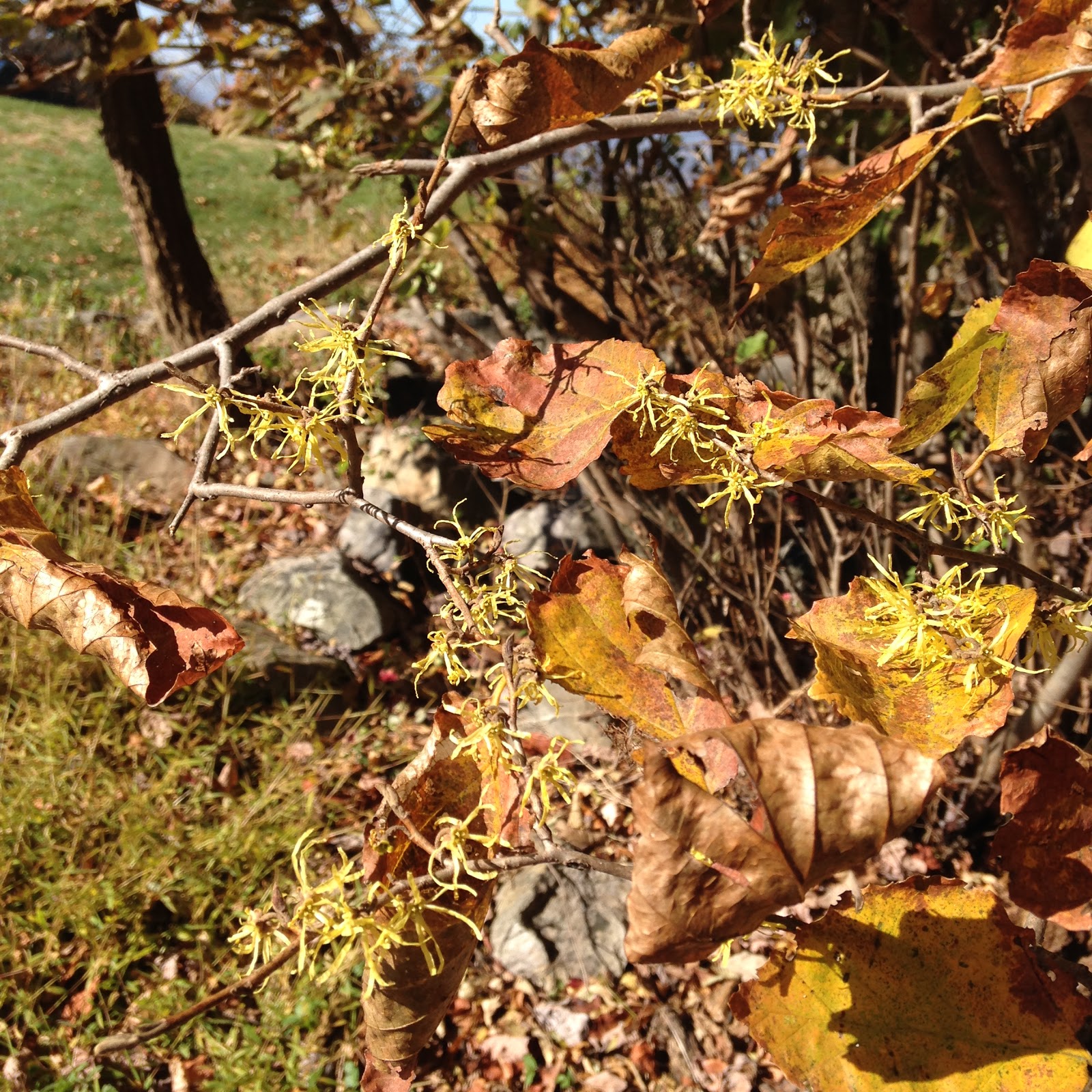
I was intrigued by this, as it looks very much like witch hazel, but I've only ever seen witch hazel bloom (in Glasgow) in February. 

Tuesday, October 13, 2015

1910s Half-Mourning Dress

Advertisement for mourning clothing, early 1910s.

Like most seamstresses, I have a problem with fabric. I just keep buying it, and the speed of my sewing does not outstrip my stash. Last year I bought some fabric at JoAnn's that was on a fabulous sale. But I couldn't decide what to do with it - should I try a Regency dress? Use it for something 18th century? It wasn't till a couple months ago that I finally decided that it might make a fabulous half-mourning dress. 

I think people have worn mourning for a long time, but it was the Victorian era that took it to extremes - there was a strict code. How long you were in full mourning depended upon your relationship with the deceased. After that time, it would be acceptable to go into half-mourning, wearing greys, purples and mauves. 

An example of half-mourning (Victoria & Albert Museum).

This blouse is probably half-mourning as well (V&A Museum).

This 1910s dress sold on Etsy could well have been a half-mourning dress.

The pattern I used was one from Past Patterns from 1917. I'd used it before, though I hadn't done a  very good job with it, I'm afraid. This time I adjusted the pattern a little to make it larger in order to fit better, and I was more careful with the construction. 

I don't know if mine would qualify as a proper half-mourning dress, but I thought it would fit the spirit of the thing. I'm sure during The Great War, quite a profit was made in mourning clothing. 


My finished dress!

A close-up of the bodice & collar.

A picture my sister took of me with her cat: 


This dress does have its flaws, but I am happy with it, and it certainly turned out better than when I used this pattern before! 

You probably can't tell, but this is the first dress I used with this pattern. And it's not as well made at all. I'm glad I redeemed myself with my half-mourning dress. Plus I now have a proper 1910s corset, which really helps!